Playing the Game by Design
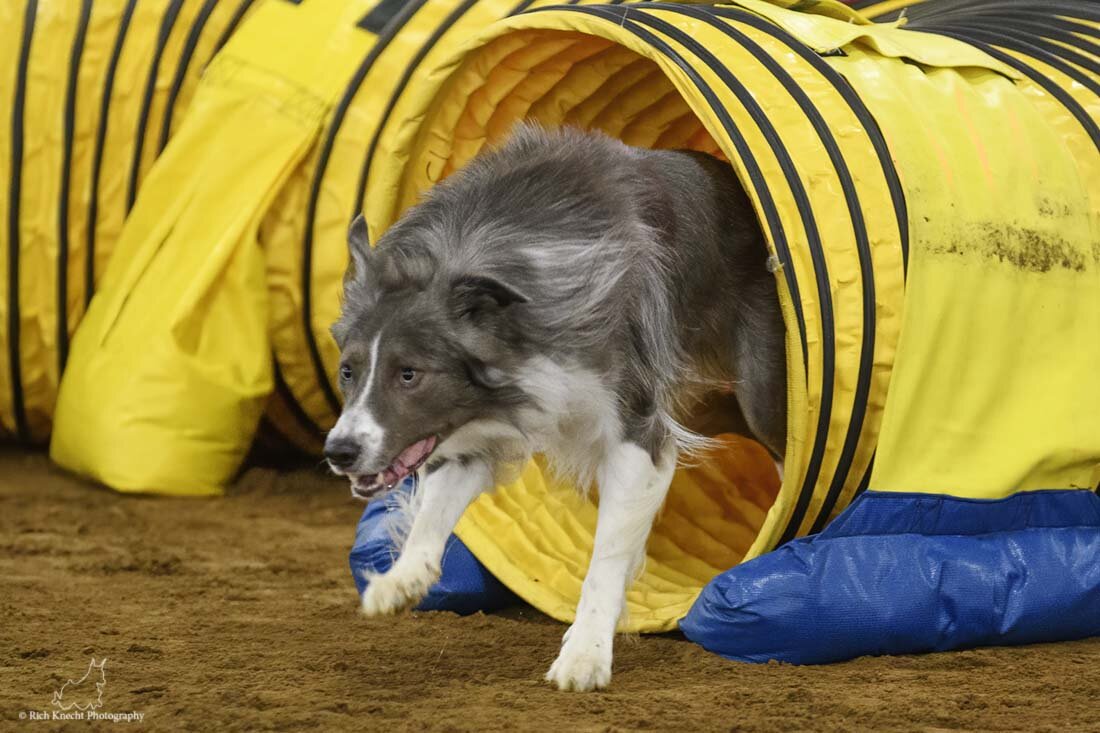
How course design can directly impact your dog’s enjoyment of Agility.

Disclosure: This site may contain links to affiliate sites that earn me a small commission at no additional cost to you. Please know that I only recommend products and services that I personally use!
I’ve been thinking a lot about motivation, drive, and how we can make this sport more enjoyable for our four legged partners. If you haven’t read my last post, start over there, because this post is a continuation of many of the same themes; except instead of looking at play in our training practices, I want to look at play in course design. Bear with me on this as I lay it all out, because I believe that course design deeply impacts our dog’s enjoyment and hence perception of play as it relates to this sport.
Now I know there are a lot of feelings and opinions around course design, and it can become an extremely subjective conversation. How many times have you heard one competitor leave a course saying “it’s got no flow and the lines are awful” while another competitor raves about “great flow and great lines”? So let’s define some terminology to help take this conversation from subjective to objective.
Flow, in my book, specifically relates to the dog’s path. I don’t care about the handler’s path, that’s my job to manage. I do care about the dog’s path, and I firmly believe that courses should consist of natural flowing lines for the dog. Now what am I talking about with flowing lines? I mean that throughout the course, in fact, for the majority of the course, I should be able to stand on the dog’s path and see / commit to the next obstacle. I should be able to commit to that obstacle naturally, without considering handling, or “shaping” the line. This is important to me because the sooner a dog can commit to an obstacle the faster they can drive to the obstacle. Additionally, for the less driven or less confident dog, I think this element of course design has the single biggest impact on a dog’s success and hence whether they perceive the game as fun. Stay with me here.
Dogs want to know that they are right, and want to predict that they are going to be right. If a dog can see and commit to the next obstacle, the act of completing the obstacle will be self-rewarding. As you race through the course you’re grabbing little reinforcement moments and dropping them into your piggy bank like Mario grabbing pennies on his way to rescue Princess Peach. This means that the dog leaves the ring with more reinforcement history than when they entered the ring, and also that your dog will be extra happy and pleased with themselves.
Now what happens when a dog can’t see and commit to the next obstacle (i.e. the course does not have flowing lines)? It means they can’t anticipate where they’re going. They run the entire course questioning, and for the very sensitive dog this doesn’t need to be something dramatic; just the act of checking their stride, or redirecting their line can be enough to deliver blows to their confidence. I’ve seen it time and again with my own dogs, and from others at trials; the dog gets this look like “ugh I was wrong”, and their stride gets shorter, and their level of independence drops. Then you leave the ring having “gotten through” the course, but what has your dog learned? That courses are traps designed to make them feel bad. That they can’t trust their training on the course, and maybe that they can’t trust you. So rather than building confidence and drive in our dogs, we’re eroding it, and each run is a little slower than the last.
Now don’t get me wrong. I’m not saying a course should be a straight line of 19 jumps, or that we can’t have 180’s somewhere on course. I am saying that if I were to walk the dog’s path and tally up the number of times that I could commit to the next obstacle vs. not, that ratio should be skewed towards the former. Our dogs should never have to run a course where they are left wondering “what’s next” after every single jump.
All of this soul searching has led me to one conclusion: I need to do better for my dogs. I need to be a better advocate and training partner. I need to be more discerning in the types of courses I train on, and the judges I will run under. And I need to do better as a coach and instructor. The more competitors who can recognize flowing lines (as I’ve defined them here), and who have seen first hand the benefits of training and competing on them, the more people will demand this type of course design. Ultimately, this will only create happier more confident dogs throughout the Agility world, which I think is something to strive for.