Managing Multi-dog Mayhem
My Household Philosophies for Minimizing the Chaos
Disclosure: This site may contain links to affiliate sites that earn me a small commission at no additional cost to you. Please know that I only recommend products and services that I personally use!
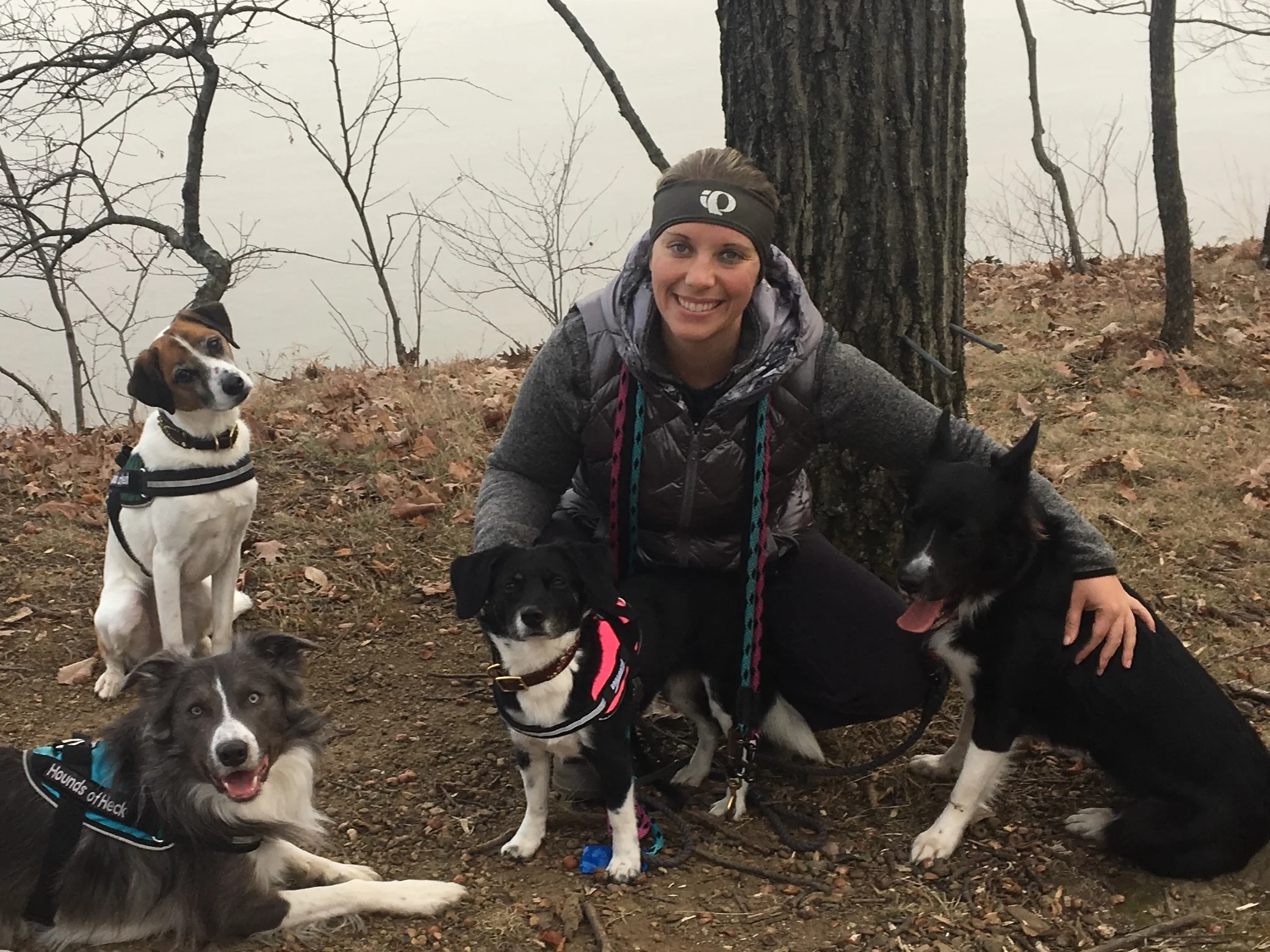
If you haven’t noticed, I have a few dogs…3 to be exact, and at some point there will likely be a fourth. To the average person, this sounds like I’ve crossed over into the land of hoarders, and am one step away from being featured on the hit tv show. But to the sport world, 3 is reasonable, even on the low side. Think about it: it takes 2 - 3 years to train a puppy up and give them enough time for their growth plates to set before they are competition ready. Additionally, most dogs are retiring from competition somewhere between 8 and 12. Sure there are exceptions one way or another to both of these metrics, but the reality is, to compete consistently, you need a pipeline of pups. Not to mention the fact that if your goal is to compete on an International Stage, or win at the National Level, the more well trained dogs you compete with, the more likely this becomes.
So long story short, I have a lot of dogs. But what I pride myself on, is that when you come to my house it doesn’t FEEL like a lot of dogs. There isn’t barking, lunging, snarling, snapping, chasing, stealing, mayhem, even for the non-dog lover. That’s because in addition to training my dogs for agility, I put a lot of time and effort into training them to be good house-hold citizens, and making sure they are welcome where ever we travel. As I mentioned last week, crates are just one of the tools I use to accomplish this; they keep everyone safe at feeding time, and give each dog their own spot to retreat to where they won’t be bothered by the others. I have also spent a lot of time thinking about my Household Philosophies: what behaviors I like and don’t like, and how I want my pups to interact with me and one another. It’s worth noting that each household is different, and different folks have different NO GO behaviors, so your rules don’t need to match exactly, but you should think through what your rules are, where you draw the line, and how you can enable success from your pups.
No Biting the Momma - this is absolutely non-negotiable for me. There will be no biting me under any circumstances. I think it goes without saying that don’t nobody want to get bit, not to mention that bites are one of the main reasons dogs end up in a shelter. Oh you think its so cute that your puppy bites your stockinged feet? Yeah we’ll see how cute that is when you’ve got a 50lb dog who you’ve now taught to bite your feet in a frenzy. Now… the flip side of this is frustration biting, where a dog bites because they feel their handler hasn’t been clear, and while this is still a no go in my book, when I start to see this, it tells me something about my training that needs to change. So I take a breath, re-watch my videos and look at my mechanics on my reinforcement. Am I clearly marking? Am I reaching for a treat too early? Am I marking the right behaviors? So biting is a two way street, but you for sure should not be reinforcing bite behavior (unless you are teaching a police dog and that’s a whole different story).
Social Interactions are a 2 Way Street - what I mean by this is that I know each of my dogs, what they like and don’t like in play and interactions, and I watch them all together very closely. I start this at puppy-hood, being sure that I teach the puppy to respect each dog’s boundaries. Even if your adult dog is a saint, there is no way they want to be jumped on, bit, have their toys stollen, etc. for 24 hours a day from your little puppy. Just because I enjoy reading books to your kid doesn’t mean I want to be their personal climbing gym. Way too often, I see people only correct the adult dog, and never correct the puppy. What this results in is an adult dog who is afraid to appropriately teach the puppy social boundaries, and who likely also now has a negative association with that puppy. As adults, I then continue to manage these interactions. Is Fin hovering over someone’s marrow bone? I’ll redirect Fin onto a different bone, or pop him in a crate with a Kong. My dogs don’t get to steal things out of each other’s mouths, and because of that, we eliminate a lot of extreme resource guarding behavior. All 3 of my dogs can eat from bowls side by side without snapping, snarling or stealing. And again, that starts with setting boundaries for the puppies.
Each Dog Gets Their Own “Room” - I don’t mean this literally, but each dog gets their own resources that are “theirs” and no other dog gets. This means they get their own space (usually a crate, but sometimes a bed), their own toys, and most importantly independent access to me. Your pack can be the best of friends, but dogs have a variety of personalities, just like people, and just because I like you, doesn’t mean I want to spend every waking moment with you. Similarly, I don’t force any of my dogs to interact with one another. Those interactions are something I allow to build over time, and the fact that they choose to do it themselves tells me that they really do like each other. One on One time with me is so key. From a practical standpoint I don’t know how you can properly shape anything when you have a second or third dog offering behaviors at the same time, that’s a slippery slope to frustration behaviors. Additionally, half of dog training is the bond we have between our dogs; our ability to read their micro-expressions, to know what does and does not work for them. You can never get this if you’ve got another dog diverting your attention. And this doesn’t go just for training, it goes for play as well. Each pack has one dog who’s a little pushier, who will be in the middle of the game at all times. This dog will slowly edge out your less pushy dogs, who either retreat into a corner looking sad, or who may never try to play with you because as soon as they do another dog will shove their way in. You can also see the same thing if you watch dog-dog interactions. So I make sure to put the pushier dog up, and work on building confidence and play drive in the more reserved dog.
So these are the philosophies I try to run my house by, and so far they seem to be paying off. It’s worth noting, that I am constantly evolving these and tweaking them as I see new behaviors arise, or add another dog or person in the dynamic.
So give it some thought, think about how you’d like your household to run, and then think about how you can enable that to happen. Then pop on over to our Facebook page and join the discussion!